
সংবাদ শিরোনাম : Badiul Alam Chowdhury A Life Dedicated to the Language Movement, Education and Social Welfare.
Staff Correspondent, Chattogram
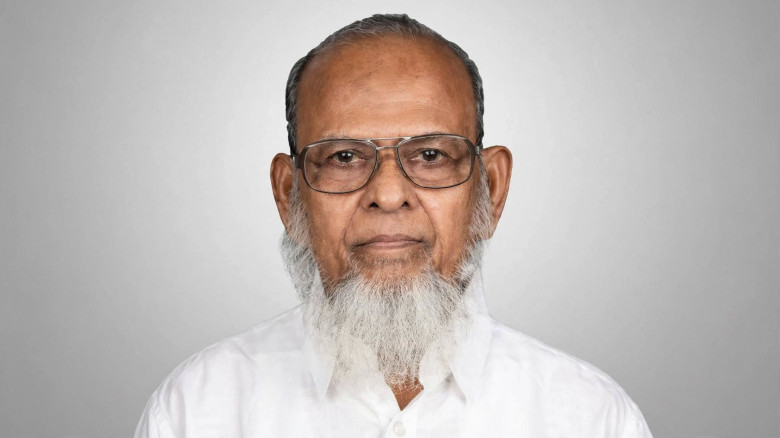
Badiul Alam Chowdhury was a prominent figure in the social, political, educational and welfare activities of Chattogram. His contributions to the Language Movement, development of educational institutions, social welfare, politics and public service have made him a notable figure in the history of the region.
According to biographical accounts, Badiul Alam Chowdhury was born on January 19, 1932, into a respected family in Uttar Kattali, Chattogram. His father was Wahidul Alam Chowdhury and his mother was Sultanara Begum Chowdhury. He lost his father at the age of one and was subsequently brought up under the care of his grandfather, Alhaj Foyez Ali Chowdhury.
On January 4, 1964, he married Lutfa Begum Suraiya Chowdhury, daughter of a prominent zamindar family from Chakaria in Cox’s Bazar. The couple had six children, who later became established in their respective fields.
A Family with a Rich Legacy
Badiul Alam Chowdhury came from a family deeply connected with the social and cultural history of Chattogram. Several of his ancestors, including Mohammad Ilias Khan and Mohammad Hashim Nazir Khan Chowdhury, contributed to education, healthcare, business and public welfare.
Members of the family were also associated with early initiatives in the shipping sector of the Indian subcontinent. They contributed land and financial assistance for educational and healthcare institutions and supported mosques, madrasas and other charitable initiatives.
The family played an important role in promoting education and healthcare in the Kattali area. Their contribution to the advancement of women's education was also notable.
Active Role in the Language Movement
One of the most significant chapters in Badiul Alam Chowdhury's life was his involvement in the Language Movement of 1952. According to his biography, he became actively associated with the movement from 1948.
He was involved with the activities of Tamaddun Majlish and participated in meetings, processions and awareness campaigns in support of Bangla as the state language.
He also took part in rallies and protest programmes in Chattogram, including programmes held at Laldighi Maidan. He remained associated with the Chattogram branch of Tamaddun Majlish for many years.
In recognition of his contribution to the Language Movement, he later received a Language Movement Honour Award from a private organization, according to the biographical account.
A Life in Politics
Badiul Alam Chowdhury was also actively involved in politics for many years. His political career began under the influence of the political environment surrounding former Prime Minister of Pakistan Huseyn Shaheed Suhrawardy.
During the 1954 United Front election, he actively campaigned in areas including Pahartali, Double Mooring and Sitakunda in Chattogram. He worked to mobilize public support for the United Front.
Over the years, he remained associated with various political organizations and democratic movements. His biography also records that he received proposals from national-level political leaders to become involved in political activities.
He was later nominated for a ward commissioner position under the Chattogram City Corporation and subsequently became involved in local government activities.
Contribution to Education and Social Welfare
Education was one of the major areas of Badiul Alam Chowdhury's social activities. He served as a founding member and vice-president of the management committee of Kattali Nurul Haq Chowdhury High School.
He provided land and financial support for the institution and contributed to its infrastructure development. During his involvement, various development initiatives, including expansion of school facilities and construction of a science laboratory and shopping complex, were undertaken.
He was also associated with the re-establishment and development of Kattali Nurul Haq Chowdhury Government Primary School, where he served as chairman for an extended period.
Alongside education, he was involved with various social and cultural organizations. He also contributed to the development of educational institutions, including Foyez Ali Chowdhury Memorial Kindergarten.
A Modest Approach to Business
Although business was part of his family tradition, Badiul Alam Chowdhury was not primarily interested in expanding his commercial activities. According to his biography, he largely relied on income from inherited property and family businesses.
Family-owned businesses in Kattali and other parts of the city, along with income from the Colonel Hat commercial complex, were among the sources supporting his family.
However, instead of focusing solely on expanding his business, he devoted considerable attention to his family, society and public welfare.
The Historic Nazir Bari
The historic Nazir Bari is also closely connected with the family history of Badiul Alam Chowdhury. According to the biographical account, the house was visited at different times by religious scholars, spiritual figures, poets, writers, journalists and political leaders.
National poet Kazi Nazrul Islam, poet Jasimuddin, writer Mahbubul Alam and journalist Abdus Salam were among the notable personalities associated with the house. A number of prominent political figures also visited the residence over the years.
As a result, Nazir Bari has come to be regarded not merely as a family residence but also as a significant part of Chattogram's social, cultural and political heritage.
A Lasting Legacy
Badiul Alam Chowdhury's life cannot be assessed solely through his political activities. His involvement in the Language Movement, contributions to educational institutions, social welfare initiatives and participation in local politics demonstrate the breadth of his public engagement.
Through his work in education, social welfare and public life, he remained closely connected with the people of Chattogram for decades. His life and contributions represent an important chapter in the social and political history of the region and continue to hold relevance for future generations.