সংবাদ শিরোনাম : Disruption to Fertilizer Supplies Through Strait of Hormuz Raises Fears of Food Crisis
International Desk | AdChannel24.com
The United Nations has warned that disruptions to fertilizer shipments through the strategically important Strait of Hormuz could trigger food security challenges in parts of Asia and Africa. Unless an agreement is reached soon between the United States and Iran, fertilizer supplies could remain under pressure during a critical agricultural season. This could lead to lower agricultural production and increase the risk of rising food prices in international markets.
Jorge Moreira da Silva, the United Nations Under-Secretary-General and Executive Director of the UN Office for Project Services (UNOPS), raised these concerns in an interview with Reuters on Wednesday, October 14, on the sidelines of the annual meetings of the International Monetary Fund (IMF) and the World Bank in Bangkok.
According to the UN official, failure to reach an agreement within the coming weeks could mean missing an important agricultural window. This could significantly affect crop production and put additional pressure on food markets.
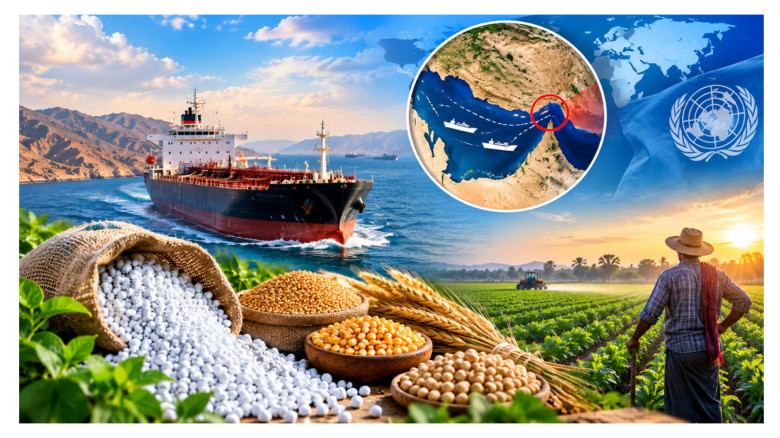
The Strait of Hormuz connects the Persian Gulf with the Gulf of Oman. It is one of the world's most important maritime routes for transporting energy and other commodities from the Middle East. In addition to oil and natural gas, the waterway plays a significant role in the transportation of raw materials used in agriculture and chemical fertilizers.
As a result, prolonged disruptions along this route could affect not only Middle Eastern countries but also nations that depend heavily on imported agricultural inputs.
Before the disruption, approximately one-third of the world's internationally traded urea and nearly half of the sulfur transported by sea passed through the Strait of Hormuz, according to the Reuters report. Urea is a widely used nitrogen fertilizer, while sulfur is an important raw material for various industrial processes, including fertilizer production.
Any prolonged interruption could therefore affect fertilizer availability in multiple countries and create further uncertainty for global agricultural markets.
The United Nations' Proposed Initiative
To address the situation, the United Nations established a special task force in March to facilitate the safe movement of fertilizer-carrying vessels through the Strait of Hormuz. The initiative proposes a coordinated mechanism to maintain fertilizer shipments through the waterway.
However, the plan has not yet been fully implemented because the relevant parties have been unable to reach the necessary agreement.
According to Moreira da Silva, the proposed arrangement could potentially be activated within seven to ten days if the United States and Iran agree to it. The plan includes establishing a coordination centre in Oman to manage vessel registration, verify cargo information and coordinate safe passage.
Under the proposal, allowing at least five vessels to transit the Strait of Hormuz each day could help maintain fertilizer supplies to important destination markets. The arrangement would also include monitoring vessel movements and conducting additional inspections when necessary.
The objective is to prevent agricultural input supplies from coming to a complete standstill while broader political and diplomatic negotiations continue. However, implementing the plan would require agreement among the relevant parties and an effective security framework.
Why an Agreement Between the United States and Iran Matters
Tensions between the United States and Iran over the security of the Strait of Hormuz have complicated efforts to restore normal maritime traffic. According to the Reuters report, proposals have been exchanged through intermediaries, but progress toward restoring regular shipping operations has faced obstacles.
Iran's conditions and Washington's position on Iran's nuclear programme have added further complexity to the negotiations.
A spokesperson for the US State Department told Reuters that the US military had assisted commercial vessels travelling through the strait. Washington has also stated that it opposes attempts to restrict freedom of international navigation.
However, implementing the UN's proposed fertilizer transport mechanism would require more than a political understanding. Practical issues such as vessel registration, cargo verification, transit permissions and procedures for addressing security risks would also need to be resolved.
Potential Effects on Global Food Markets
Fertilizers play a crucial role in agricultural production. If farmers cannot obtain sufficient fertilizer at the appropriate time, crop yields may decline. Countries that rely heavily on imported agricultural inputs could face additional pressure if supply disruptions continue.
According to a forecast cited in the Reuters report from an August report by the International Chamber of Commerce, prolonged disruption in the Strait of Hormuz could place substantial upward pressure on commodity prices. The forecast indicated that grain prices could rise by as much as 81%, oilseed prices by 66% and animal product prices by 30% under certain scenarios.
These figures represent potential outcomes rather than guaranteed price increases. Actual market movements would depend on supply conditions, alternative sources of imports, transportation costs, existing stocks and policy responses by individual countries.
Higher fertilizer prices could increase farmers' production costs and affect agricultural output and marketing. Rising fuel and transportation expenses could also place additional pressure on food supply chains. However, the scale of the impact would vary from country to country.
Why the Issue Matters for Bangladesh
The international fertilizer supply situation is also important for Bangladesh, where agriculture depends on a reliable supply of fertilizer. An increase in international fertilizer and energy prices could raise import costs and put pressure on the agricultural input market.
However, it would be premature to conclude that the current situation in the Strait of Hormuz has already caused fertilizer or food prices to rise in Bangladesh without reliable local market data. The country's import sources, government stocks, domestic production, transportation costs and market management will all influence the potential impact.
Relevant government agencies therefore need to monitor international market developments, fertilizer import costs and the continuity of supplies during the agricultural season. Ensuring that fertilizer reaches farmers on time could help reduce the effects of potential supply shortages.
Disruptions to Multiple Shipping Routes Increase Concerns
Concerns about food security are not limited to the Strait of Hormuz. According to the UN official's remarks, security conditions in other important maritime regions, including the Black Sea and the Red Sea, have also deteriorated.
Disruptions to shipping routes used for agricultural inputs and food commodities could make international supply chains even more complicated.
Global trade depends on an interconnected transportation network. When a major maritime route is disrupted for an extended period, vessels may need to use alternative routes, increasing travel times and transportation costs. Delayed shipments can place additional financial pressure on countries that depend on imports.
If the UN's proposed initiative succeeds, it could help address at least one important challenge affecting fertilizer transportation. Nevertheless, long-term food security will require political agreements, safe maritime navigation and sustained international cooperation.
Overall, restoring fertilizer shipments through the Strait of Hormuz is not merely a commercial concern; it is also closely linked to global agricultural production and food security. A timely agreement between the United States and Iran could create an opportunity to implement the UN's proposed mechanism. Otherwise, the risk of supply shortages during the agricultural season and increased pressure on international food prices could persist.
Sources: Reuters report published on October 14, 2026, and analysis by the United Nations Conference on Trade and Development (UNCTAD) concerning disruptions to maritime transport through the Strait of Hormuz.