
সংবাদ শিরোনাম : No Income but Have a TIN? What You Need to Know Before Deciding on Your Tax Return
Staff Reporter
Publication Date: 27 October, 2026
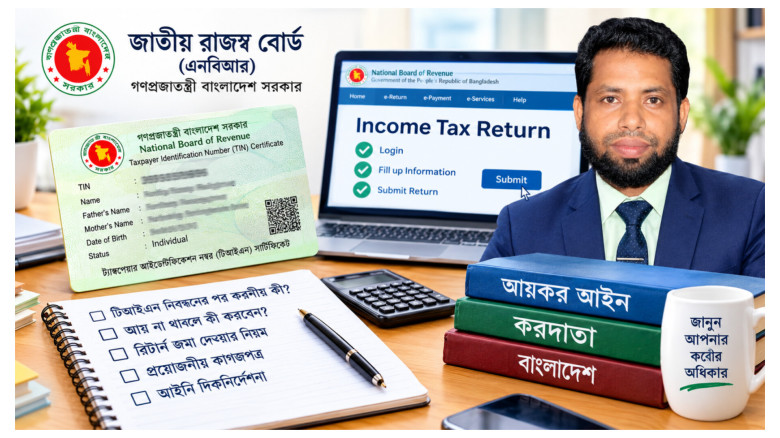
Many citizens have obtained a Taxpayer Identification Number (TIN) online for personal or institutional purposes. Some registered for employment or business-related reasons, while others did so to access specific services. However, after completing the registration process, many are now facing uncertainty because they lack a clear understanding of the rules for filing income tax returns. The issue is particularly concerning for those who currently have no income and are unsure about what steps they should take.
What responsibilities arise after obtaining a TIN? Is it necessary to file an income tax return even when there is no income? What complications could arise if the required formalities are not completed within the prescribed deadline? These are among the questions ordinary citizens want clear answers to. Many believe that if they have no income, they do not need to pay taxes. However, since paying income tax and filing an income tax return are two different matters, it is important to assess one's individual circumstances before making a decision.
One TIN holder said that when registering online several years ago, they had little knowledge of the responsibilities that would follow. As they currently have no taxable income, they are uncertain whether filing an income tax return is necessary. Like this individual, many people face difficulties determining what to do next because they were not adequately informed about their tax-related responsibilities at the time of registration.
In Bangladesh, a TIN may be required for various services and financial activities. As a result, many people obtain one to fulfil a specific requirement without paying much attention to their subsequent tax obligations. Later, when the return submission deadline, taxpayer responsibilities or possible legal consequences become a concern, they begin to feel anxious about their situation.
The first thing to understand is that having a TIN does not automatically mean that a person must pay a specific amount of income tax. The amount of tax payable depends on factors such as an individual's income, the applicable tax-free threshold and other relevant considerations. On the other hand, even if no income tax is payable, there may still be a legal obligation to file a return under certain circumstances. Therefore, it would be incorrect to assume that everyone without income is exempt from filing a return.
The requirement to submit an income tax return may depend on the applicable laws for the relevant tax year, an individual's income and other financial information, as well as the conditions that apply to their particular situation. Before making a decision, it is important to determine why the TIN was obtained, whether it is currently being used for any purpose, and whether there is a legal obligation to file a return.
The issue requires particular attention for students, unemployed individuals, people with irregular earnings and citizens who currently have no income. Without a clear understanding of what information must be included in a return when there is no income, whether previous income or asset information is relevant, and which documents should be retained, taxpayers may be at risk of submitting incorrect information.
In such cases, it is important to provide information that accurately reflects the taxpayer's actual financial circumstances. Individuals should not enter arbitrary figures in a return simply because they have no income, nor should they copy information from another person's tax return. Instead, they should prepare their returns using accurate information in accordance with the applicable rules. If necessary, they may seek assistance from an experienced tax adviser or the relevant tax office.
Although online income tax return filing is available, many first-time users are unfamiliar with the entire process. Ordinary taxpayers could benefit from simple, step-by-step explanations covering where to access the system, how to complete the required information and which details to verify before submitting a return.
There is also considerable concern about whether failing to file a return could lead to fines or other legal complications. Rather than relying on information circulating on social media, taxpayers should consult the latest guidance issued by the National Board of Revenue (NBR) and review the relevant legal provisions. It is not advisable to assume that the same consequences apply to everyone; the appropriate course of action should be determined according to each individual's circumstances.
People who previously obtained a TIN but believe they no longer need it should not ignore the matter. They should seek confirmation from the relevant authority regarding whether cancellation is possible, what conditions apply, and whether any previous tax-related obligations remain outstanding. It should not be assumed that submitting a cancellation application automatically settles all previous obligations.
Publishing clear and accessible government guidelines could help reduce this confusion. At the time of TIN registration, applicants could be provided with concise information about income tax return requirements, relevant deadlines and the steps to follow when they have no income. Step-by-step assistance through the online system, along with reliable answers to frequently asked questions, could also prove useful to citizens.
Raising public awareness about the tax system requires not only informing people about the rules but also making those rules easier to understand. Accessible and reliable information would help reduce unintentional mistakes and unnecessary anxiety, particularly among first-time TIN holders and people unfamiliar with tax-related procedures.
TIN holders hope that the relevant authorities will publish clearer and more user-friendly information to increase public awareness of income tax return requirements. This would help individuals without taxable income understand their circumstances and take the necessary steps in accordance with the law.