
 MOHAMMAD MOINUDDIN
Publication Date: October 12, 2026
Reporter: News Desk
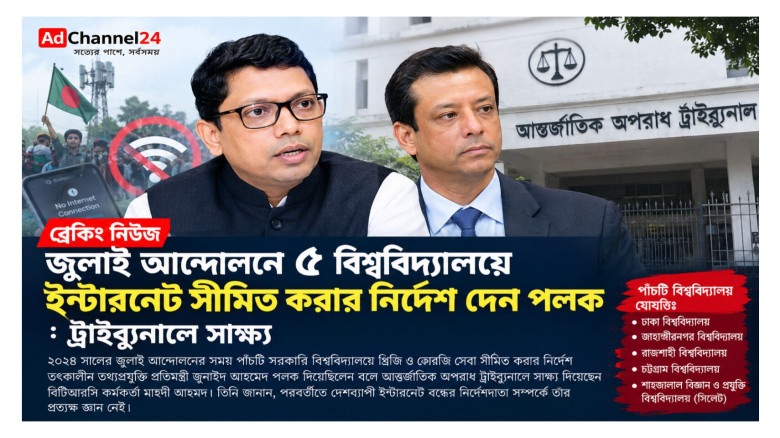
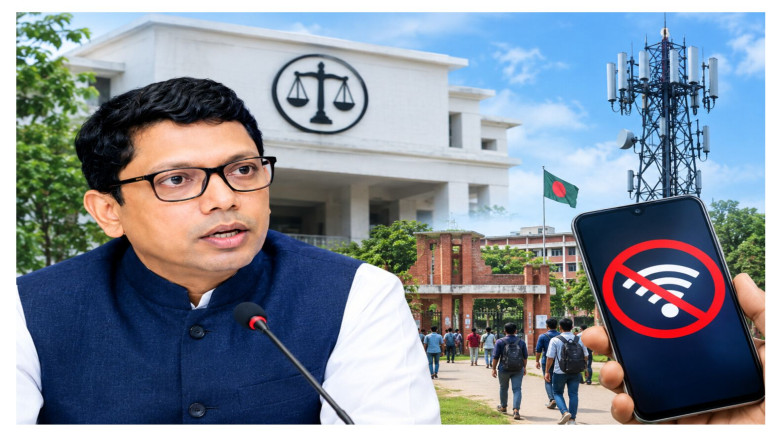
Former State Minister for Posts, Telecommunications and Information Technology Zunaid Ahmed Palak ordered the suspension or restriction of 3G and 4G mobile internet services at five public universities during the July 2024 mass uprising, according to testimony given by Bangladesh Telecommunication Regulatory Commission (BTRC) Deputy Director Mahdi Ahmed before the International Crimes Tribunal.
He made the statement on Sunday, October 11, while testifying in a case concerning the internet shutdown during the July uprising and allegations of crimes against humanity.
According to the witness, mobile internet services were suspended or restricted at Dhaka University, Jahangirnagar University, Rajshahi University, Chittagong University, and Shahjalal University of Science and Technology in Sylhet. His testimony also addressed communications among telecommunications officials under the then-government and subsequent meetings concerning the restrictions.
However, the witness also stated that he had no direct knowledge of who ordered the nationwide mobile internet shutdown. Therefore, the reported instructions to restrict services at specific universities and the decision to shut down internet services across the country must be considered separately.
BTRC Official's Testimony Before the Tribunal
According to a report published by The Business Standard on October 11, Mahdi Ahmed told the International Crimes Tribunal that on the night of July 14, 2024, Brigadier General Mostafizur Rahman, the then Director General of BTRC, contacted him via WhatsApp.
During the conversation, he was informed that then State Minister Zunaid Ahmed Palak had instructed the then BTRC Chairman, Engineer Mohiuddin Ahmed, to suspend or restrict 3G and 4G services at five public universities.
The witness's statement brought to light administrative communications related to the implementation of the directive. According to his account, mobile internet services were subsequently restored at the universities concerned.
Testimony before a court means that an individual is presenting information known to them before a judicial authority. However, the court must assess the testimony alongside other evidence and the cross-examination of the witness to determine the credibility of the information and its relevance to the allegations in the case.
Five Universities Where Services Were Reportedly Restricted
The witness identified five public universities where mobile internet services were reportedly suspended or restricted. They are:
1. Dhaka University
2. Jahangirnagar University
3. Rajshahi University
4. Chittagong University
5. Shahjalal University of Science and Technology, Sylhet
According to the report, BTRC officials communicated about the directive on the night of July 14, and the relevant services were restored the following morning.
The witness also stated that on July 16, instructions were issued to impose similar restrictions at all public universities and four private universities.
The reported restrictions raised questions about the role of internet connectivity in facilitating communication during the movement. Since mobile internet is important for exchanging information, maintaining urgent contact, and learning about developments at protest sites, the potential impact of such decisions has drawn public attention.
However, determining the purpose of a specific decision, the extent of its implementation, and its relationship to subsequent events requires judicial examination of relevant documents and testimony.
Sajeeb Wazed Joy and Palak Participated in the July 16 Meeting
According to the BTRC official's testimony, a meeting was held on July 16 to discuss restrictions on the relevant services. Sajeeb Wazed Joy, the then Prime Minister's Adviser on Information and Communication Technology, and Zunaid Ahmed Palak reportedly joined the meeting online.
The witness stated that the decision to restrict services was subsequently approved and that details of the approval were recorded in official documents. His testimony provided the tribunal with information about the decision-making process within the telecommunications sector.
However, participating in a meeting, being aware of a decision, approving a decision, and being legally responsible for a criminal offence are not the same thing. Determining the role of any individual requires an assessment of their specific actions, the decision-making process, applicable laws, and other evidence.
The witness's statements concerning Sajeeb Wazed Joy and Zunaid Ahmed Palak may therefore be relevant to the judicial proceedings. Nevertheless, no definitive conclusion about the allegations against them can be drawn solely from this testimony.
What Did the Witness Say About the Nationwide Internet Shutdown?
One of the most important distinctions in the case concerns the reported restrictions on mobile internet services at specific universities and the nationwide internet shutdown.
BTRC official Mahdi Ahmed told the tribunal that he did not know who had ordered the nationwide suspension of mobile internet services. Although he referred to discussions concerning the role of the National Telecommunication Monitoring Centre (NTMC), he said he had no direct knowledge of the identity of the person who issued the nationwide shutdown order.
This distinction is particularly important for accurate news reporting. Information that a witness says they know directly should not be presented in the same way as matters about which they acknowledge having no direct knowledge.
Therefore, while reporting the testimony concerning restrictions at the five universities, it is equally important to clarify that the witness did not identify the person responsible for ordering the nationwide internet shutdown.
Developments on July 28 and July 31
According to the witness, a meeting chaired by then State Minister Palak was held on July 28, 2024. He stated that instructions were issued at the meeting to restore 3G and 4G services through the country's four mobile network operators.
The testimony also referred to instructions issued at the same meeting to keep the cache servers of Facebook, TikTok, Akamai, and Bangladesh Submarine Cable Network (BAS Network) shut down.
The BTRC official further told the tribunal that instructions were issued to restore mobile internet services on July 31.
These statements suggest that several decisions and meetings concerning telecommunications and internet services took place during the movement, according to the witness. The timing, implementation, and authority behind these decisions may form part of the tribunal's assessment of the evidence.
However, it would be inappropriate to assign additional explanations or motives to these decisions beyond what the witness stated. The relevant issues may become clearer through documentary evidence, statements from the individuals concerned, and cross-examination during the proceedings.
Internet Restrictions and Questions of Public Interest
Internet connectivity is an essential part of modern communication. During political movements, emergencies, or large public gatherings, people rely on mobile internet to obtain information, contact family members, and follow developments at the scene.
Restrictions on internet services in a particular area can affect the flow of information. However, determining the extent of that impact, the duration of any interruption, and the reasons behind the decisions requires reliable documents, technical information, and direct testimony.
This is one reason why the judicial proceedings concerning internet restrictions during the July uprising are significant. Examining the decision-making process and the roles of the individuals involved may help establish an evidence-based account of the events.
At the same time, the legal basis for decisions affecting national security, public safety, and citizens' access to information, as well as the question of accountability, remains important. Nevertheless, determining the legal responsibility of specific individuals in this case is the responsibility of the court, not the news media.
Attention Turns to the Next Stage of the Case
The testimony delivered before the tribunal on October 11 has brought forward additional information about the reported restrictions on telecommunications services during the July uprising.
In particular, the witness's statements concerning the restrictions at five public universities, the meeting on July 16, and his lack of direct knowledge about who ordered the nationwide internet shutdown may be relevant to further judicial examination.
During subsequent hearings, lawyers representing the accused may question the witness about his statements. Cross-examination may examine the details of his account, the sources of his information, and whether his testimony is consistent with the relevant documents.
For accurate updates on the case, readers should follow tribunal orders and reports from reliable news organisations. It is inappropriate to declare anyone guilty before a final judicial determination, just as it is important to report significant information emerging from the judicial process accurately.
The testimony of a BTRC official concerning restrictions on internet services during the July uprising has raised important questions about decision-making within the telecommunications sector.
The witness's statements about the reported restrictions at five public universities must be considered alongside his clarification that he had no direct knowledge of who ordered the nationwide internet shutdown.
The next stage of the proceedings will be important in determining how the testimony, relevant documents, and statements from the defence are assessed. Until the court reaches a final decision, the allegations and evidence should be reported carefully to ensure that readers receive accurate information and that the integrity of the judicial process is respected.